Why choose an oral thin-film format?
A compact, flexible sheet can create a distinctive everyday product experience. Good development starts with a realistic view of ingredient loading, testing and market requirements.
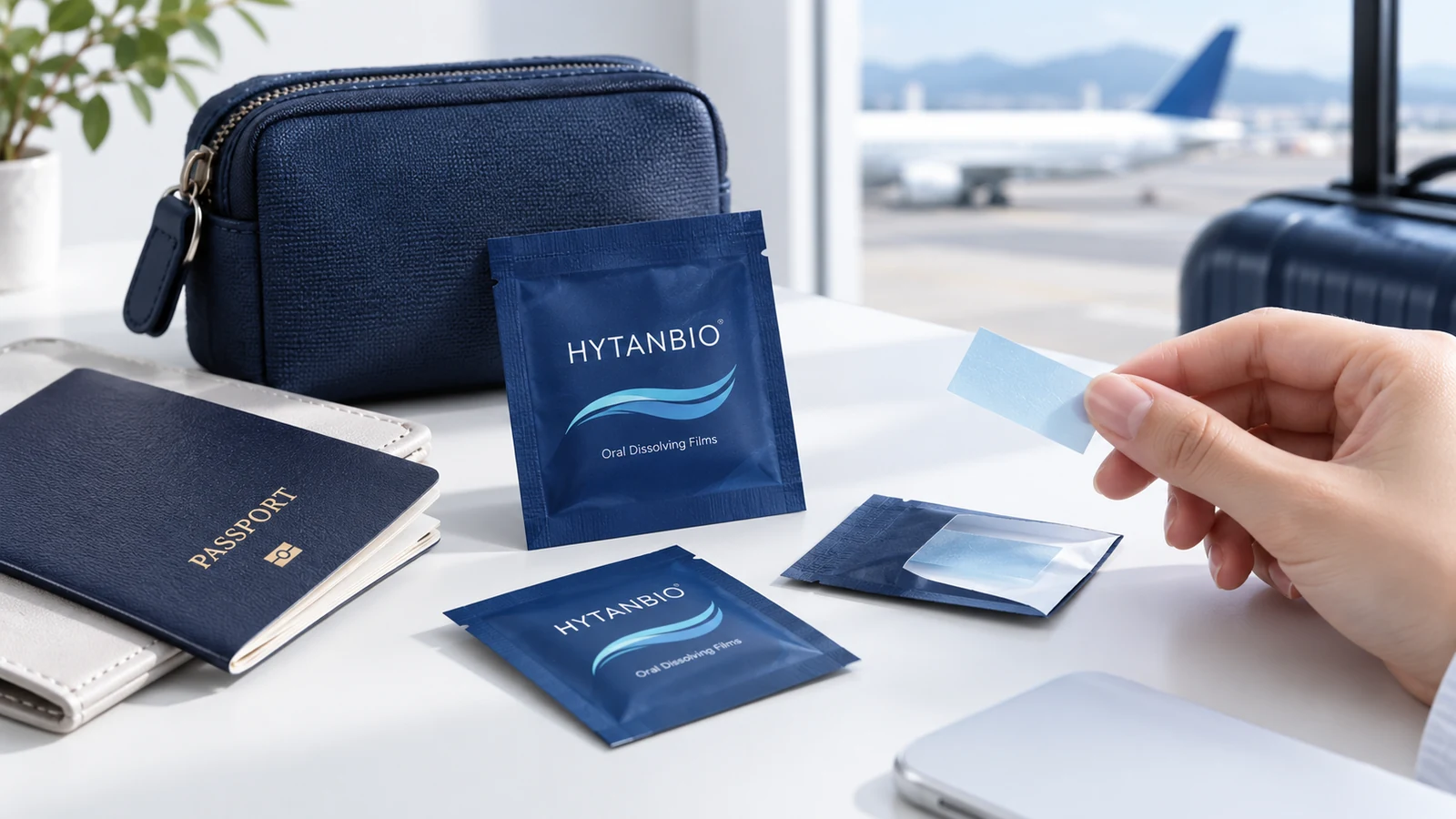

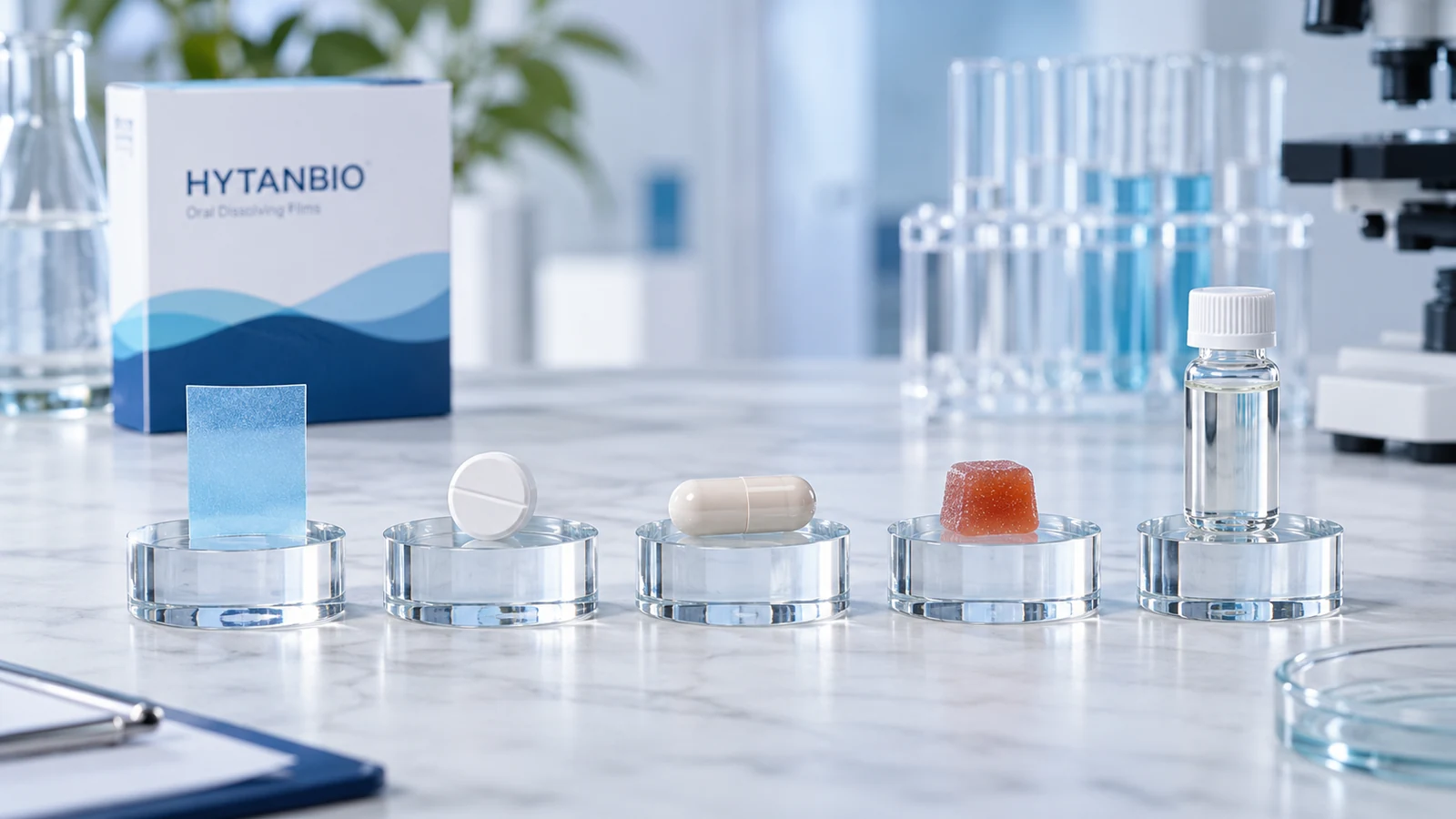
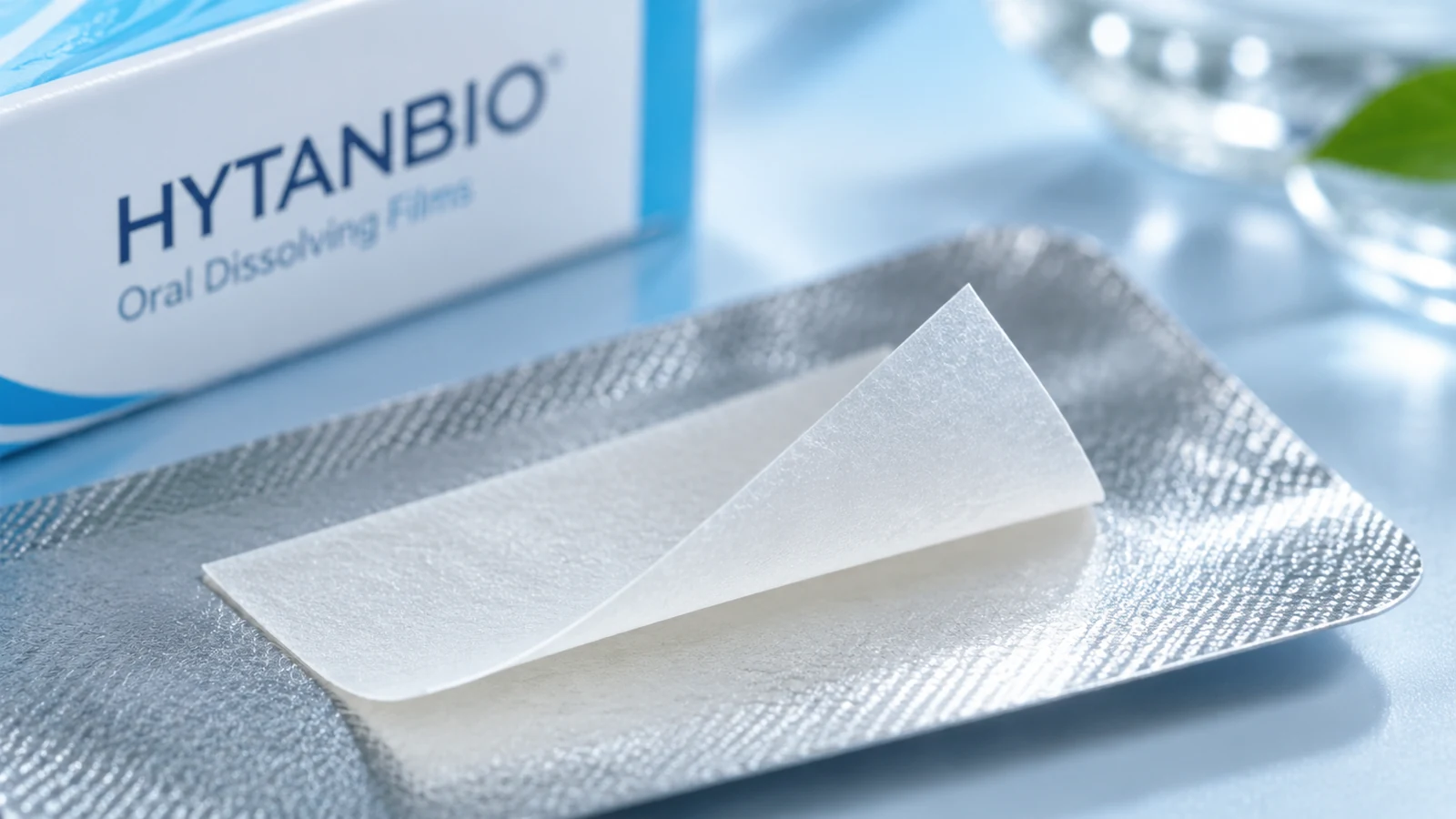

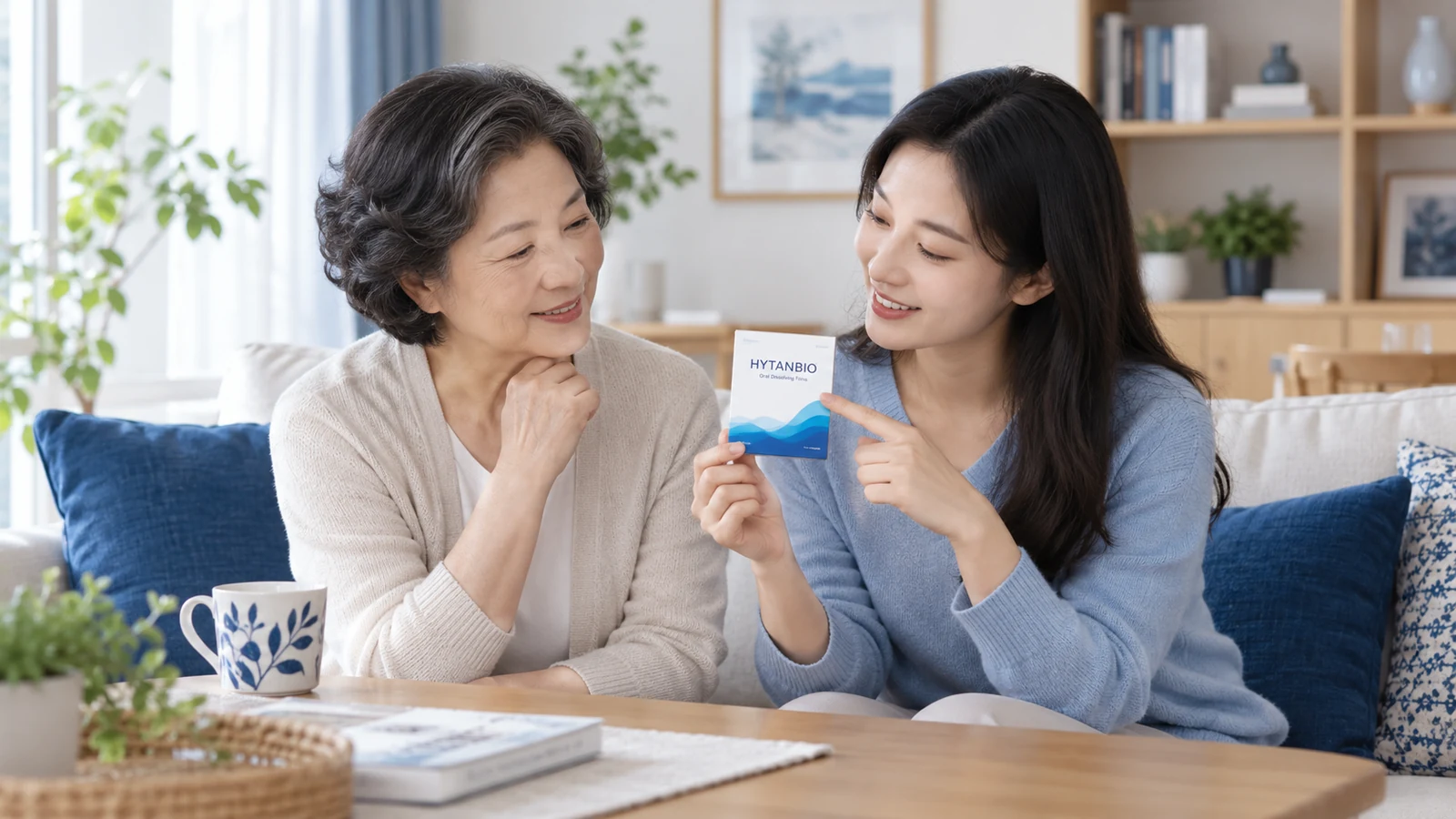
Illustrative product and workflow photography. Final film appearance and packaging are confirmed during project development.
Convenience with a defined technical brief.
Water-free use
No water oral films can suit on-the-go use when the final instructions permit.
Portable unit packaging
Portable oral films use a compact single-unit pack to protect a delicate sheet.
Flexible sensory design
Flavor, texture and film dimensions influence acceptance as much as visual appeal.
Controlled unit specification
Uniformity and ingredient content need a validated analytical and manufacturing approach.
Barrier-pack protection
Moisture and oxygen exposure are reviewed for the actual formulation.
Honest delivery expectations
Oral film delivery does not automatically mean enhanced bioavailability or bypass of first-pass metabolism.
Design for the intended users.
Oral films for adults are scoped around the target market and ingredient brief. Oral films for kids, oral films for seniors and prenatal concepts need a separate population-specific safety and labeling review. Convenience is not evidence of suitability for swallowing disorders.
Oral films for women and oral films for men should be based on a defined nutritional brief, rather than assumed benefits from demographic labeling. Oral films for athletes and oral films for gym use require practical serving levels and review of the selected ingredients.
Oral films for students, oral films for work and oral films for busy people often emphasize a compact format. Oral films for travel and on the go oral films still need storage instructions and robust individual packaging. Oral films for morning and oral films for night should clearly state the intended use and any ingredient warnings.
Easy to take oral films can improve a use experience, but the finished-product instructions and individual circumstances remain essential.
Common format questions.
How do oral dissolving films work?
A film-forming matrix interacts with saliva and releases the incorporated ingredients as the sheet disintegrates or dissolves. The release profile depends on the full formula, size, thickness and testing method.
How long do oral dissolving films take to work?
Dissolving time and physiological onset are different questions. A validated dissolution result does not establish absorption speed or a clinical onset time. Both depend on the formulation and evidence.
Are oral films better than pills?
They can suit portability and a water-free use brief, while pills may better accommodate large ingredient loads. Choose the format against the product specification and user needs.
Can you swallow oral dissolving films?
Follow the finished product’s instructions. Some orodispersible films release ingredients for subsequent swallowing; they should not automatically be described as transmucosal delivery systems.
Are oral dissolving films safe?
Safety depends on ingredient identity, serving level, intended population, contaminants and the finished-product evaluation. A film’s convenience does not prove safety for every user.