Dissolution Is Not Absorption: Understanding Oral Film Evidence
Separate the measurements
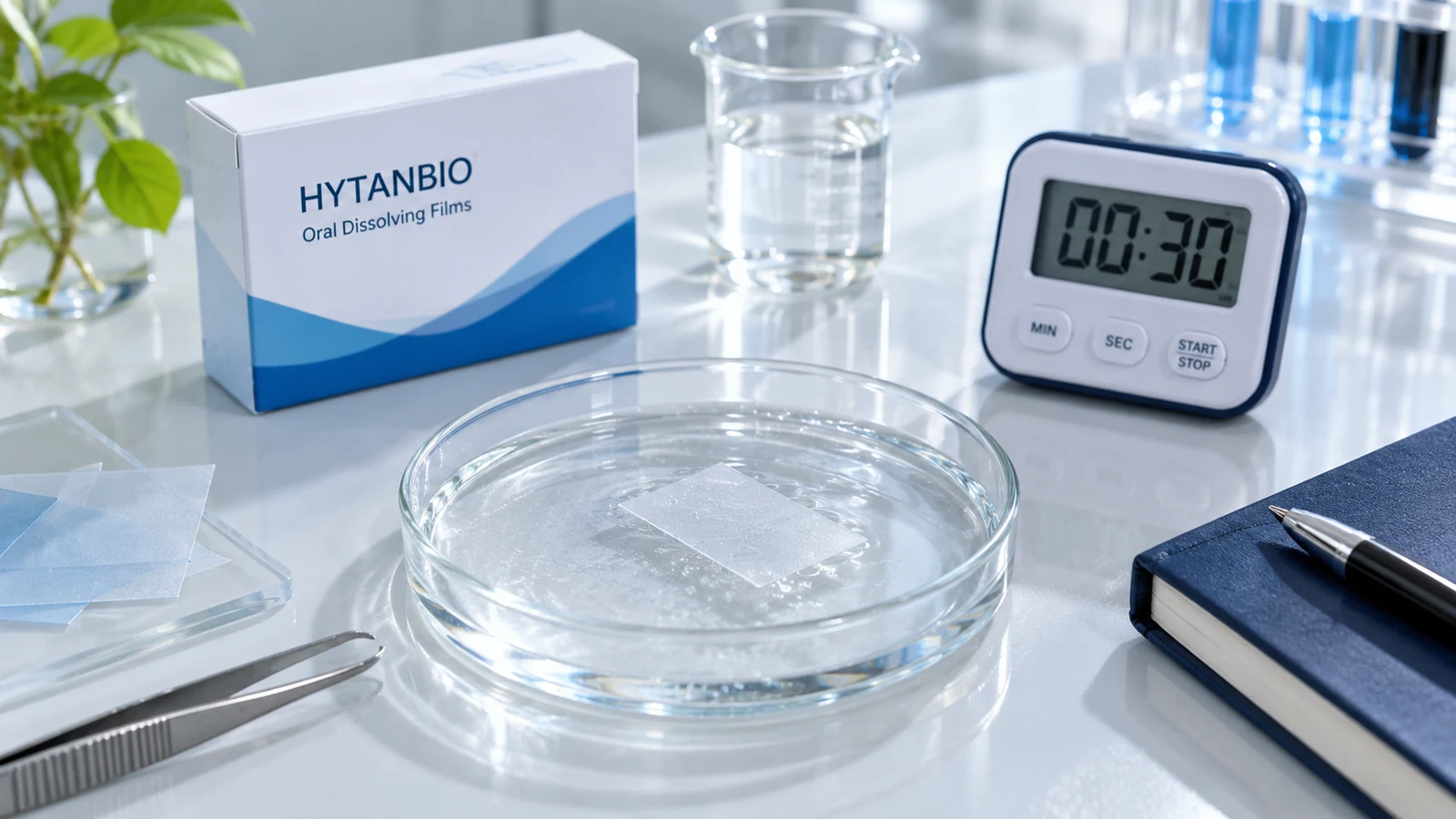
Disintegration describes a film breaking down. Dissolution describes relevant material entering solution under a defined test. Ingredient release, absorption and a physiological outcome are additional questions.
A short dissolution time can be useful for a sensory or specification brief, but it cannot be converted into a clinical onset time. Measurements should be named accurately in product information.
The delivery design matters
An orodispersible product may release ingredients for swallowing. A product designed for buccal or sublingual delivery needs a more specific formulation and evaluation. The words oral or dissolving do not establish the route.
Claims of avoiding gastrointestinal processing or first-pass metabolism should not be generalized across the product category. The active, matrix, contact conditions and evidence all matter.
What a brand should ask for
Request the test method, sample conditions and actual results that support a technical statement. If a performance claim is proposed, ask whether evidence concerns the raw ingredient, a different delivery system or the exact finished product.
Documentation should make those distinctions clear. A laboratory film sample and a published ingredient study can both be useful, while supporting different conclusions.
Write the claim that the evidence supports
Describe practical format features such as a compact unit pack or a defined film specification when those are supported. Avoid universal claims of rapid action or superior bioavailability.
This approach produces a more credible B2B brief and reduces the risk of a brand committing to a promise before the development and market review are complete.
Related project resources
Explore the oral film product portfolio · Review OEM, ODM, CRO and CDMO options · Request a sample evaluation brief