OEM, ODM, CRO and CDMO for Oral Films: Choosing the Scope
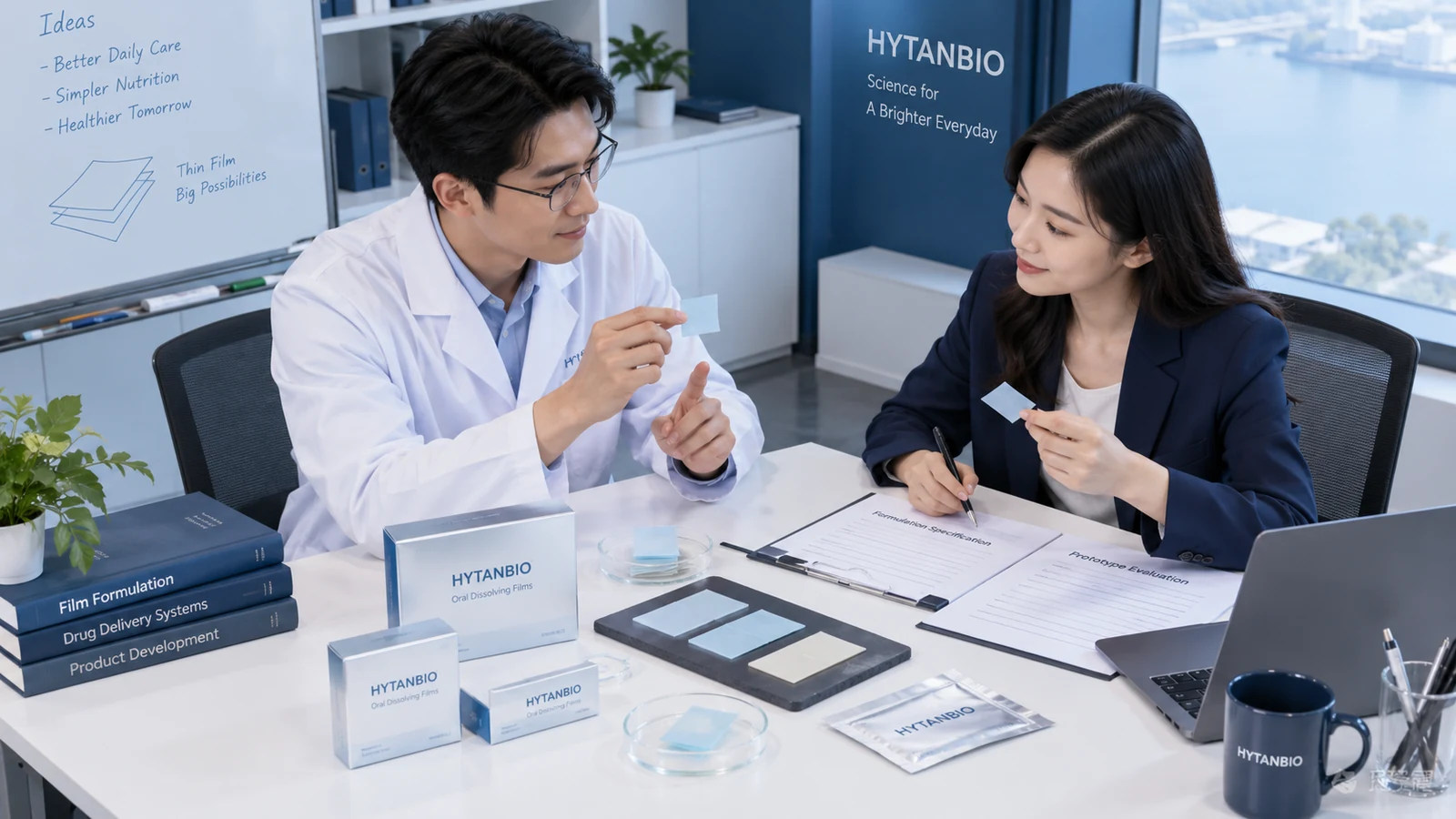
OEM and ODM starting points
Oral films OEM often begins with an agreed concept, specification and brand packaging. ODM oral dissolving films can include formulation and sensory development against a new brief.
The distinction becomes useful only when the deliverables are defined. Identify the prototype program, formula approval, packaging scope and testing responsibilities rather than relying on a service label.
CRO as a scoped technical task
Research support can address a feasibility question, analytical requirement or prototype gap. It should have an agreed objective, sample definition and report output.
A successful research result does not automatically qualify the product for commercial manufacture or market placement. Further transfer, documentation or approval work may be needed.
CDMO links development and transfer
A CDMO scope connects development with a defined manufacturing approach. Formulation, process parameters, unit controls, packaging and relevant documents need to work together.
Contract manufacturer oral films is an awkward search phrase, but the underlying buyer need is straightforward: identify the responsible manufacturing entity and agree on the actual supply and release scope.
Agree before starting
Document the intended market, ownership, change controls, acceptance criteria and commercial milestones. Samples should be approved against a written specification rather than a vague impression.
This approach supports a transparent relationship for both a small private label program and a broader development-to-manufacturing project.
Related project resources
Explore the oral film product portfolio · Review OEM, ODM, CRO and CDMO options · Request a sample evaluation brief